Best Things to Do in Santiniketan for a Memorable Weekend
Follow the road map, one stop at a time — from your first Bengali thali to your last cup of tea in clay.
A weekend that unfolds like a story
Some places ask you to hurry. Santiniketan does the opposite. It asks you to slow down, to sit under a tree a little longer, to finish your tea before the clay cup is even cool. A weekend here is not about ticking off sights; it is about letting the town reveal itself, one chapter at a time.
So we have laid this guide out like a road map. Start at Stop 1 and simply keep going. Each stop leads gently into the next, and by Sunday afternoon you will have eaten well, wandered far, laughed a lot and filled your phone with photographs.
Arrive & Settle In
Your story begins around noon. As you roll into Santiniketan, the pace of the road changes. The traffic thins out, the trees grow taller and the air feels a little softer than the one you left behind.
Check in to your hotel or homestay, drop your bags, wash off the journey and take a moment at the window. This is the last time today you will be in a hurry, and you are not really in a hurry now. A good weekend starts with a good lunch, and lunch is waiting.
A Sumptuous Bengali Thali
There is only one proper way to say hello to Bengal, and that is with a thali. Rice at the centre, a little ring of bowls around it — something bitter to wake you up, something fried and crisp, a fish or chicken curry that you will want to mop up to the last drop, and a sweet to close the meal.
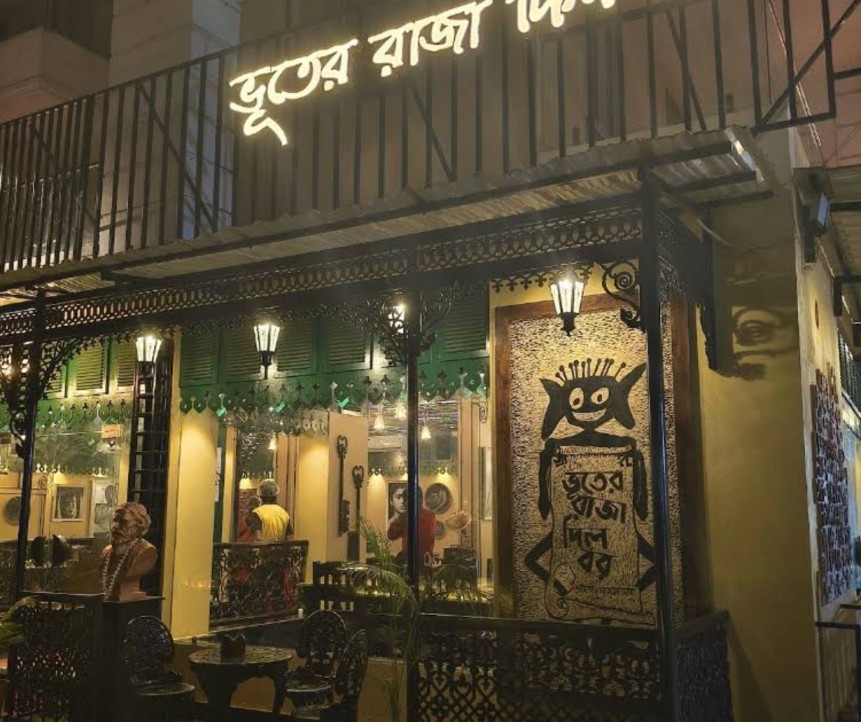
Pick any of the town's well-loved tables: Mahamaya Hotel, Ram Shyam Restaurant or Bonolokhi. And if you are in the mood for something fancier, with a bit of theatre and a lot of atmosphere, make your way to Bhooter Raja Dilo Bor.
Sonajhuri Forest & Haat
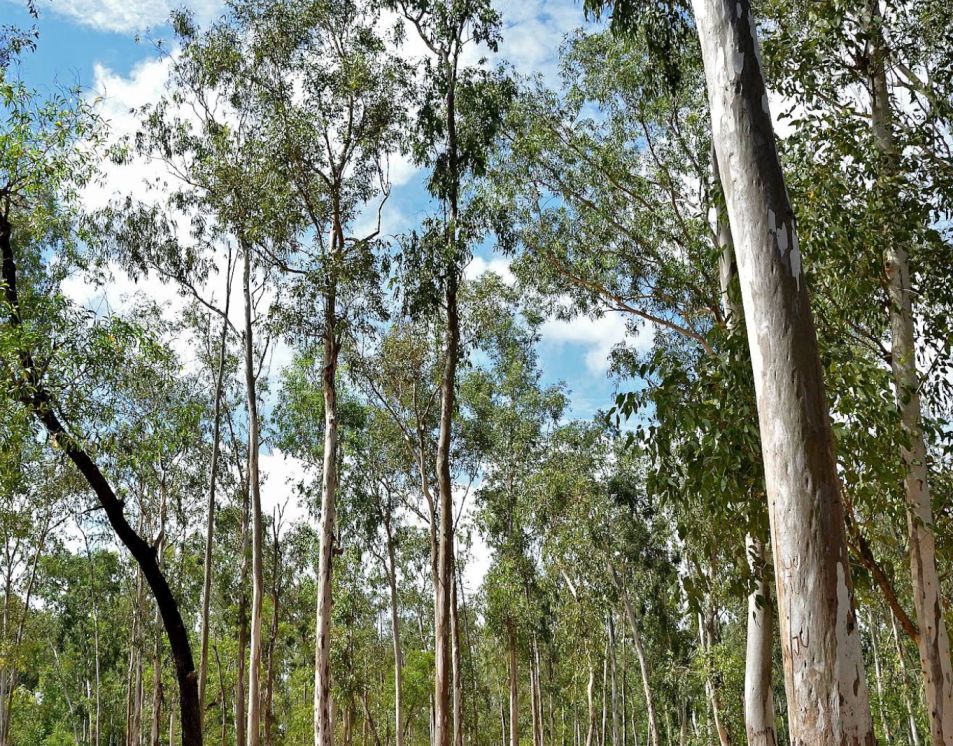
The afternoon belongs to Sonajhuri. Tall trees throw dappled shade over the ground, and beneath them the haat comes alive with colour: hand-stitched Kantha, dokra brass, jute, terracotta, bright jewellery and the sound of Baul music drifting from somewhere nearby.
Do not rush the haat. Stop at the stalls that catch your eye, bargain with a smile, click pictures with your family and friends, and let everyone wander off in a different direction for a while.
Bhar er Cha at a Small Tea Stall
Find one of the small, beautiful tea stalls tucked around the haat and order a bhar er cha — tea poured into a little clay cup. It arrives hot, a touch smoky and with that earthy smell of fresh terracotta that no glass or porcelain can imitate.
Sit, sip and watch the world go by. When the cup is empty, the clay goes back to the earth, which is exactly how it should be.
Kanch Mandir at Golden Hour
As the evening starts dawning upon you, make your way to the Kanch Mandir, the glass temple, also known as Upasana Griha. In the soft light of late afternoon, its coloured glass and quiet interior feel almost unreal.
This is the stop for photographs. Click lots of them — the building, the surroundings, your friends laughing, the light falling across the courtyard. But also put the camera down for a minute and just look.
Chatim Tala & the Quiet of the Ashram
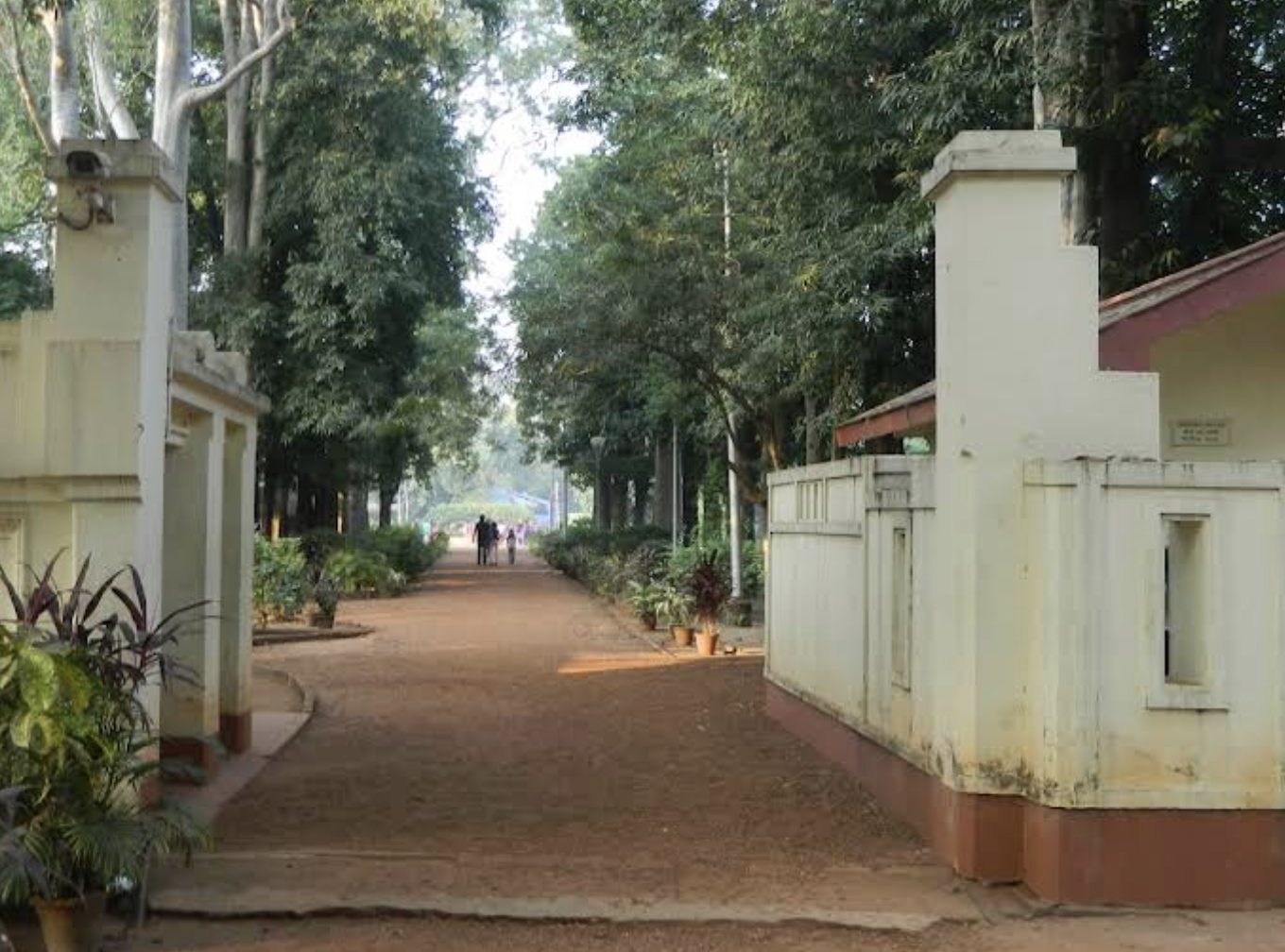
Next, explore Chatim Tala, where the energy of the day finally settles. Walk without a plan, stand under the old trees and let the stillness of the ashram area wash over you.
If Sonajhuri was the loud, colourful chapter of your day, this is the gentle one. Talk softly, walk slowly and let the evening do what it does best in Santiniketan: simply be beautiful.
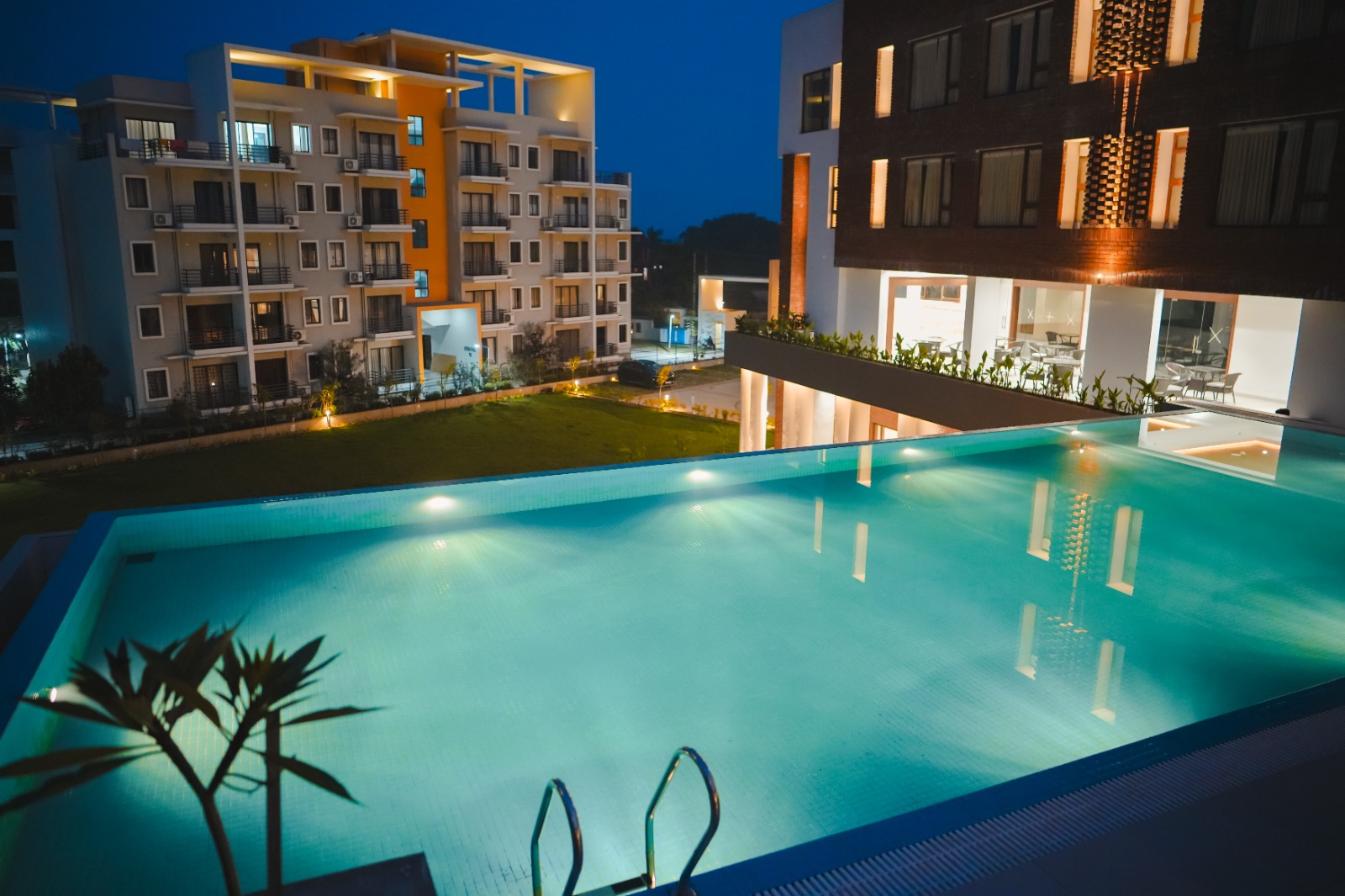
Pool, Snacks & an Early Night
If you are staying at a resort, this is where it pays off. Head back, change into something comfortable and enjoy the amenities. Spend a relaxed hour by the pool with some snacks, a cold drink and good company, and let the day replay itself in conversation.
Then have dinner and go to bed early. Not because there is nothing to do, but because tomorrow is going to be a big day, and you will want fresh eyes for it.
Resorts to consider for your stay:
Wake Early, Eat Well
Rise early. Santiniketan is at its most magical in the morning, when the light is gentle, the air is cool and the campus is still waking up. Start with a good buffet breakfast at your hotel — eat properly, because today is the day you walk, and you will walk a lot.
This is the cultural heart of your weekend. Everything that made this little town famous across the world is waiting for you.
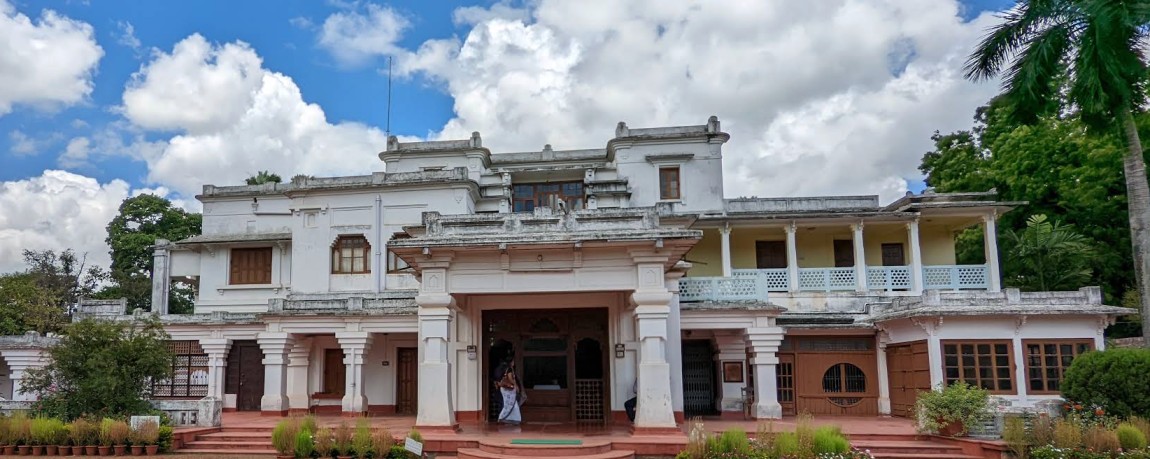
Uttarayan Complex — Tagore's Homes
Begin at the Uttarayan Complex, home to Rabindranath Tagore's preserved historic residences. Here stand Udayana, Konarka, Shyamali, Punashcha and Udichi, five houses built at different times, each with its own character and its own story.
Walk slowly through the gardens and the verandahs. You will notice that the architecture is modest and thoughtful, built to sit quietly among trees rather than to impress. It is easy to imagine the poet sitting at a window here, writing.
Rabindra Bhavana — The Poet's Archive
Step into Rabindra Bhavana, the central museum and archive. Inside are manuscripts, personal belongings and paintings of Tagore, quiet objects that make a great figure feel suddenly human.
Take your time here. Read the captions, linger in front of the handwriting and let the stories settle in. It is the kind of place that rewards patience.
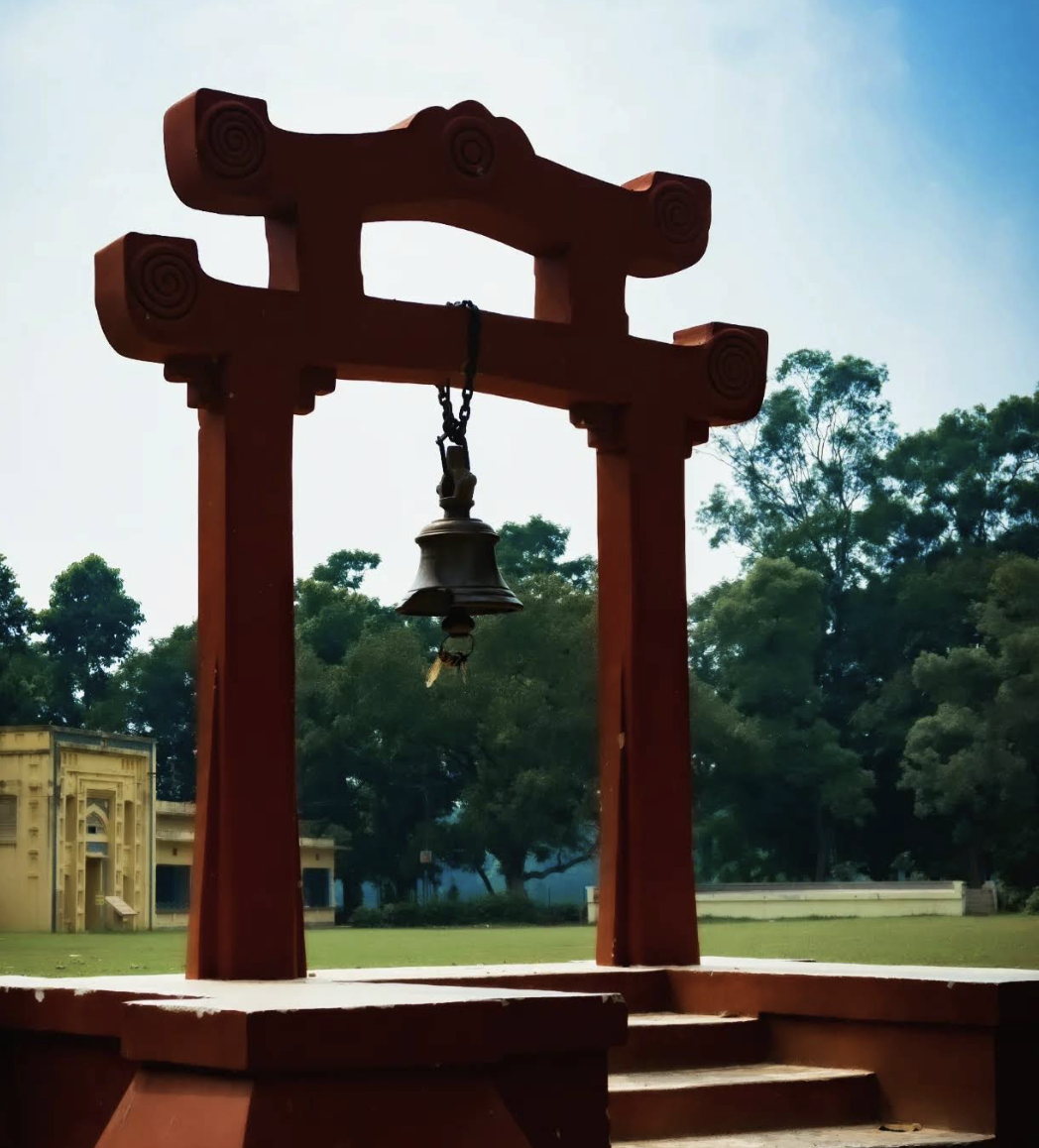
Kala Bhavana & the Heritage Campus
Walk through Kala Bhavana, the fine arts faculty, where outdoor sculptures stand under the open sky and murals cover the walls. Visit the Nandan Museum and take in the work of generations of artists who studied and taught here.
Then let the campus carry you onward. See the open-air classes layout, where students still learn beneath the trees, and walk past Patha Bhavana, the school Tagore founded. Look out for the heritage buildings, Singha Sadan and the glass temple, Upasana Griha, which you may recognise from yesterday's Kanch Mandir visit — seen again, now with its story.
A Light Lunch
After all that walking, a light lunch is just right. Go back to any of the restaurants from yesterday — Mahamaya Hotel, Ram Shyam Restaurant, Bonolokhi or Bhooter Raja Dilo Bor — and keep the meal simple. You want to feel energetic, not sleepy, for the afternoon ahead.
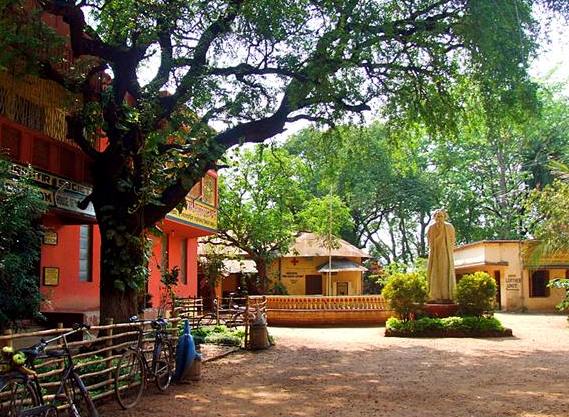
Amar Kutir or Srijani Shilpogram
Option one: Amar Kutir. A historic cooperative movement society, Amar Kutir is known for leather goods, bamboo crafts, batik prints and Kantha handlooms. Every piece comes from the hands of local artisans, so what you carry home is a little piece of the town itself.
Option two: Srijani Shilpogram. A cultural and craft village, a place to wander at leisure through craft stalls, handmade work and the creative spirit of the region.
Whichever you prefer, you cannot go wrong. If you have the energy, perhaps you will find a way to see both another time.
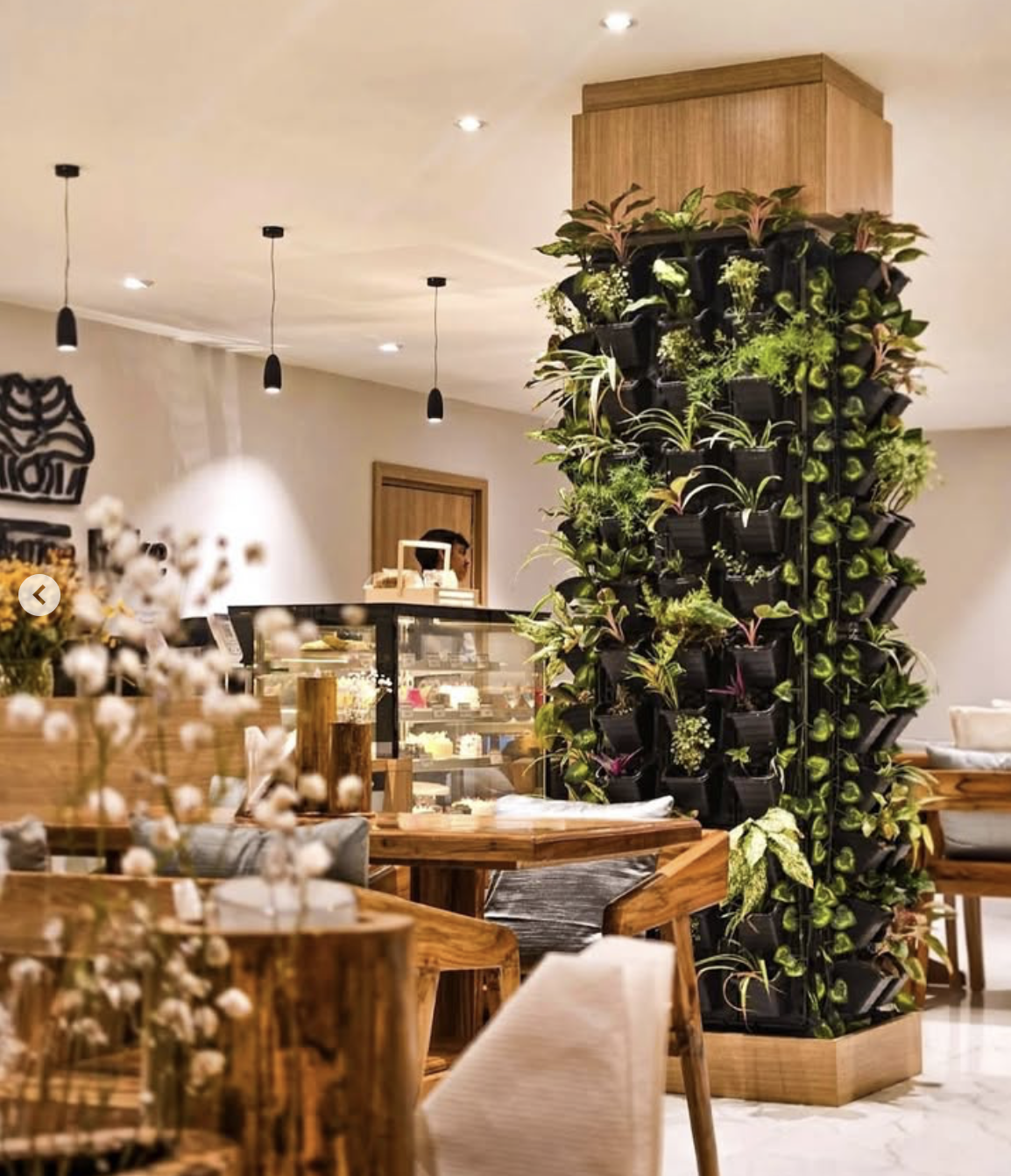
A Café Evening with Friends & Family
Santiniketan's café culture is still emerging, and that is part of its charm. In and around the town there are beautiful cafés, each with its own mood, where you can sink into a chair and let the evening stretch out.
Try Cafe Amoli, Wake & Bake, Cafe Ant Hill or Midori. Order something to share, talk about the best moment of the weekend so far and spend a beautiful evening with your friends and family. This is the stop where nobody wants to leave.
Back to Your Hotel
End the day the way it deserves: unhurried. Back at your hotel or resort, put your feet up, go through the day's photographs and let the memories sink in. Two days have already felt like a week.
One Last Buffet Breakfast
Take a slow, last morning. Enjoy a good buffet breakfast at your hotel, say goodbye to the staff and then check out. Pack your bags, along with all those Kantha pieces and craft treasures you picked up along the way.
Konkalitola Temple
Visit the Konkalitola temple on your way out. It makes a quiet, thoughtful last chapter, a moment of calm after a weekend full of colour, culture and conversation.
Head Home, Come Back Soon
As you drive away, you will notice something. The haat, the tea, the poet's houses, the glass temple and the evening cafés will already feel like a story you have been telling for years. That is the thing about Santiniketan: it does not end when you leave. It simply waits, quietly, for your next visit.
Book your stay early
Weekends in Santiniketan fill up quickly, especially during the winter season and festival weeks. Reserve your resort or homestay in advance so your road map runs smoothly from the very first stop.
Begin your Santiniketan story
Looking for a relaxing place to stay with a pool, good food and easy access to every stop on this road map? Get in touch and we will help you plan.
Contact Us